

Do you worry about how your IVA will affect your partner or spouse?
In reality, the fact you are in an IVA should have little or no impact on your partner. The Arrangement is nothing to do with them and they are not legally implicated.
Nevertheless, there are various factors that you should consider.
Contents
- Will your partner have to pay your debts if you start an IVA?
- What happens to joint debts in an IVA?
- Will your partner have a problem with their credit rating?
- Does an IVA affect a property you own in joint names with your partner?
- Can you still use a joint bank account?
- What happens if you move in with your partner during your IVA?
Will your partner have to pay your debts if you start an IVA?
Your partner does not have to pay your debts for you if you do an IVA.
Legally speaking they are not responsible for your debts and can’t be forced to pay them.
For this reason, you only have to pay your share of the household surplus income into your IVA. Their share remains theirs to keep.
If your share of the surplus income is not sufficient to start an IVA, your partner can choose to contribute to your monthly payments if they wish. But they don’t have to.
Do you have to declare your partner’s income?
Where you live with your partner – particularly if you have children – you will normally have to declare their income in your IVA.
You might find this situation strange. At the end of the day, the Arrangement has nothing to do with them. So why do they have to give their information?
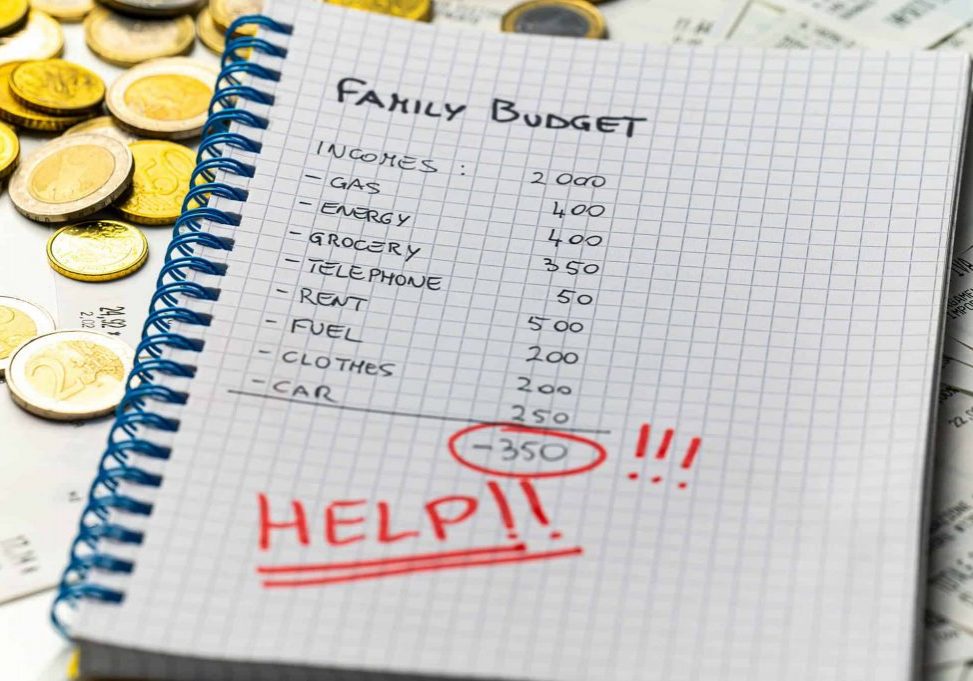
The reason is that you have to provide a household income and expenses budget to show that they are contributing their fair share to the household bills. This proves you are paying as much as you can into the Arrangement. As a result, your creditors will be more willing to accept it.
Your household budget should include the following:
- Your total income
- Information about your partner’s income
- Your combined household living expenses
The total expenses are then deducted from the total income to give a household surplus.
You pay just your share of the household surplus into your IVA – based on the same percentage as your contribution to the income. The remaining share is your partner’s. They can use this for whatever they want.
Your partner does not have to provide copies of their bank statements or wage slips. This would only apply if you were both starting an IVA.

What happens to joint debts in an IVA?
You should include any joint debts you have with your partner in your IVA – for example a joint overdraft. Doing this will protect you from the debt.
However, it is important to understand that they do not get the same protection. They remain liable for the total amount outstanding.
The reason for this is the rule regarding joint and several liability.
Joint and several liability means that you are both responsible for the entire debt. If one party does not pay, the other still has to pay 100% of the outstanding balance – not just their share.
For example:
Let’s say you and your partner have a joint overdraft with Lloyds bank of £1000.
You should include the total overdraft debt of £1000 in your IVA. However, your IVA only protects you. The other names account holder still has to pay the full £1000.
If they can’t afford to pay the joint debt, they may need to consider using a debt management solution themselves. Alternatively, you could both start a joint IVA.
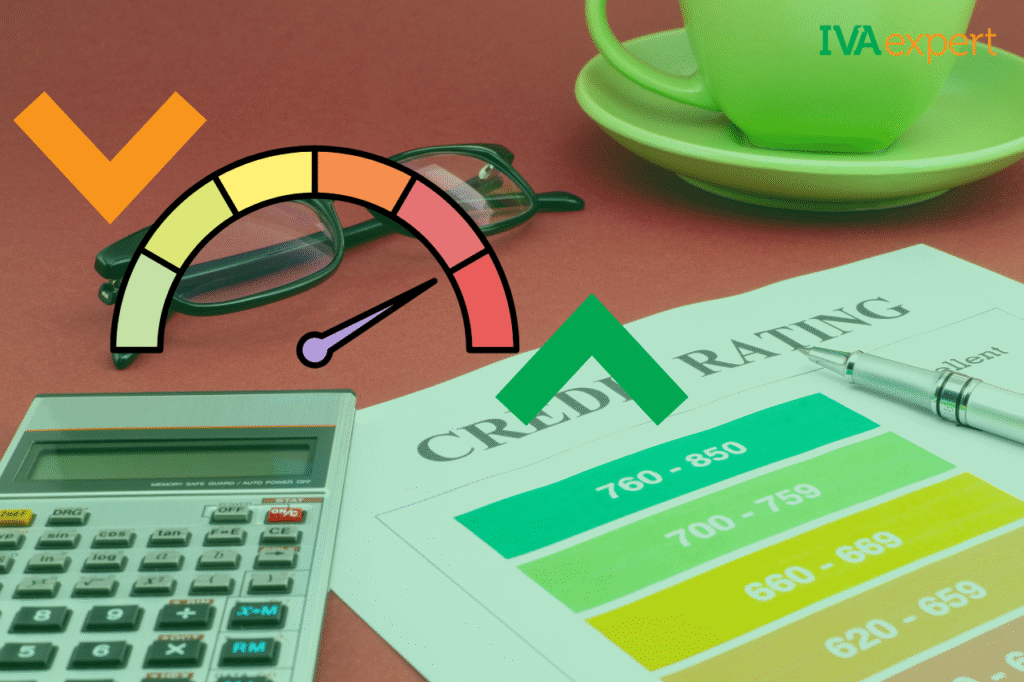
Will your partner have a problem with their credit rating?
When you start an IVA, your credit rating will become poor. However, this is not the case for your partner.
Their credit rating remains unaffected. This is because the record of your IVA does not go on their credit file. It is only goes on yours.
This situation means that they should still be able to get new credit facilities during your IVA – as long as their credit rating is not poor for other reasons.
Your partner’s credit rating should not become any worse as a result of you being in an IVA. This is the case regardless of whether you live together.
Financial Association with your Partner
If your partner has issues applying for credit after your IVA has started, this could be because they are financially associated with you.
The reason for financial association is usually that you have a joint debt. A joint bank overdraft is a common example of this.
Normally, the only way to resolve this situation if it becomes a problem is for the joint debt to be paid.
Does an IVA affect a property you own in joint names with your partner?
If you own a property in joint names with your partner (or anyone else), they do not need to be concerned about you starting an IVA.
A jointly owned property is not at risk. You will not have sell your home. In fact your IVA will protect the property from your debts.
For most IVA started after April 2025, none of the equity will be at risk.
Only your share of the equity in the property is considered when calculating how long your IVA will last. Your partner’s share is not involved.
- Where your share is worth less than £10,000, your IVA will last 5 years (in most cases).
- If your share is worth more than £10,000, your IVA will last 6 years (in most cases).
How to work out the equity in your property
Equity is the money you are left with if you sell your property after you pay the mortgage.
For example: If your property is worth £350,000 and the mortgage and any other secured debts total £300,000, the equity is £50,000. In other words the money you would be left with if you sold.
For the purposes of an IVA, you should only ever use 85% of the value of the property to calculate equity.
How does your IVA affect your partner’s property?
You might be living in a property owned by your partner. In these circumstances, there is no need to worry.
Your Arrangement will not have any impact on their property at all. It is not included in or implicated by Arrangement.
An IVA in your name will only affect you. Your partner’s property and other assets will remain untouched.
Can you still use a joint bank account?
You can have a joint bank account with your partner if you do an IVA.
But what should you do if you have an outstanding joint overdraft? Normally you would include this debt in your IVA. However, your partner is still liable to pay it.
Where they can afford to clear the overdraft balance with their own funds, there is no issue. But if they can’t, you will both need to open an account with different bank.
Opening new accounts elsewhere will protect you both from the banking Set Off rule. This rule means the bank can potentially take money from the account without your agreement.
An example of set off would be where you or your partner put money into a joint bank account. Then, because you are in your IVA, bank withdraws the overdraft facility leaving them without access to their money.
The only way to protect against the set off rule is for you both to use a bank account that you don’t owe money to.
What happens if you move in with your partner during your IVA?
A monthly payment IVA will normally last for 5-6 years. During this time your circumstances can change. One such change might be that you and your partner decide to start living together.
If you are moving into their home, they don’t need to worry. The agreement will have no effect on their property (regardless of whether they rent or own).
However, the fact that you are now living together might mean that your IVA payments will increase.
Why would moving in with your partner affect your IVA payments?
The reason is if you start sharing household bills with someone else, your total living expenses might go down. If this happens, your surplus income will increase. As a result your IVA payment will also go up.
Can you avoid involving your partner’s income and expenses?
If you want to move in with your partner during your IVA, one way you can avoid having to involve their finances is to keep them separate.
You do this by presenting your budget as if you are a lodger in their property.
In this way, the only financial connection is that you pay them rent. Your finances are totally separate and you do not have to include their information in your income and expenses budget.
Should you keep your IVA secret?
There is no rule saying that you must tell your partner that you have an IVA (or are planning to start one).
It is certainly possible to be in an IVA without letting them know. However, it is usually best to tell them if you can. When they are aware of your financial situation they will be able to support you when making financial decisions.
If you plan to move in with your partner partway through your Arrangement, you do not have to tell them. Given you keep your finances separate, there is really no need for them to know if you feel you are unable to.
Need specific advice about the affect of your IVA on your partner? Contact us to speak to one of our experts.
 Written by James Falla
Share this post







Completely FREE advice
Confidential conversations
Expert help always at hand
What we can do
Start an IVA
- In depth advice and guidance
- Comprehensive income and expenses review
- Support through the process

Self Employed IVA
- Business revenue and expenses forecast
- Personal income and expenses review
- Support through the process

Cancel IVA and go Bankrupt
- Help with cancelling IVA
- Support with bankruptcy application
- Ongoing 12 month assistance

Mortgage after an IVA
- Guidance and information
- Planning for a mortgage
- Advice on timing and deposit